+(2).jpg)
.jpg)
+(3).jpg)
+(4).jpg)
+(7).jpg)
.jpg)
+(6).jpg)
+(5).jpg)
.jpg)















One of the few really useful things I took from Psychology 101 was the notion we can have "screen memories": false certainties based upon what we've seen or heard of this or that event, a kind of psychic equivalent to arguments post hoc ergo propter hoc. I have screen memories of Henri Langlois because he figures prominently in Bertolucci's poignant memoir of the mid-60s Parisian film kultur and the roles played not only by the famed curator of the Cinemateque but by his protegees in the left-leaning New Wave movement. Without Langlois, there would never have been a New Wave. He was the Godfather of Us All.
The Dreamers lovingly caught those moments in time; so what if it is not Bertolucci's best work. He's done so many superb movies he could simply rest on his laurels, but he keeps at it. But this was not be best portrait of Langlois. That came in the documentary, The Phantom of the Cinemateque, which was utterly fascinating, delving as it did both in Langlois' cadging of rare movie prints from reluctant or unwilling sources the world over as well as his dedication to film such that he made no distinctions in his programming: you might be watching a Kurosawa Shakespeare one night and Vincente Minelli's Some Came Running the next.
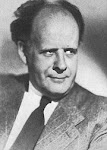
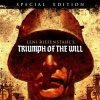
I could not have met Langlois in '65, when I was in Paris and had memories of the riots of '68, but I am almost certain I did. That is the power of a Bertolucci or of the creator of the Langlois documentary, Jacques Richard. Everyone has seen photos of the Bolshevik Revolution and sworn later they were documentaries, when in fact, they were from Eisenstein's version, Ten Days That Shook the World (shown here by that title and as October). For years documentary filmmakers, perhaps thinking that because Eisenstein is dead and the Soviet Union far away, must have felt they had free use of such silent footage; they've pirated Leni Riefenstahl's Triumph of the Will and cut it, too, into documentaries about the Nazis and especially Hitler.
Langlois's willingness to sit through any film ever made by anyone on any budget, any crew, any cast of actors, and any and all other criteria pertaining to the medium was the inspiration, on this side of the Atlantic, for the "Cult Film" sections of rental markets, both VHS and, later, DVD'S. One found oneself sitting through, say, Edgar G. Ullmer's The Black Cat and wondering, "WWLT" (What Would Langlois Think). He might begin with how authentically presented in the film is that branch of occultism known as ceremonial magic: notice the inverted pentagram above the sacrificial altar?
But then Langlois might have thought such carefully concocted literary gems as Albert Lewin's 1943 Maugham work, The Moon and Sixpence, to be pretentious and a bit too tidy, while the pedestrian madness of Sam Fuller's The Naked Kiss more worthy of respect and repeated viewing. Or, and I actually believe this is so, he had an almost-tantric position on it all. Antinomian tantrikas say, "Make no distinction between a turd and a piece of chocolate." To Langlois, there was something good in every film, no matter how awful.
Langlois loved cinema. All cinema. That is why I dedicate this blog to him.
What I did see in Europe the summer of '65 was Werner Herzog's Even Dwarfs Start Small, one of the most surreal pictures made -- unique, really, unless one wants to categorize it with, say, Todd Browning's Freaks, since the messages are similar. I have been a devoted Herzog fan since. My family loves Herzog, particularly my son, Alex. But that is another comment.
Showing posts with label Eisenstein. Show all posts
Showing posts with label Eisenstein. Show all posts
Wednesday, December 31, 2008

Sunday, July 13, 2008
Before the Devil Knows I'm Dead: A Half Dozen Film Projects I'd Like to See Made
First, let me apologize for using the title of a fine motion picture to lure you into what I am about to say. Ill health has given me a new perspective on things, such as why I should, at my age, try to get back into the screen writing game. The late John Cage, a composer of some note, once told me in response to my question whether his telling me his next project might give someone else an advantage, such as writing it first, said: "Good, then I won't have to write it." At any given time, I have a half dozen film projects floating around in my head, but no time to put them in screenplay form. Some are projects that never got made by anyone "first," while others are movies that were almost made, as well as projects that were made and quickly forgotten, usually due to their unfavorable reception.
I hope someone will make these films before the Devil knows I'm dead....
I list them in no particular order:
1. A remake of the John O'Hara novel, Appointment in Samarra. The story of the self-destruction of Julian English, if updated, might result in a sublime symbol for the ills of our time: disillusionment with "things"; a vague hopelessness; drug problems ranging from a refined sugar addiction to heroin (although I hardly see Julian's alcoholism as a relatively minor problem or one we no longer have with us). His auto dealership might be hawking Humvees and the dying market might help explain his final act.
2. The Buñuel-Carriere adaptation of Joris-Karl Huysmans' wicked roman a clef, La-Bas, an examination of occultism and Satanism in Paris and Lyons during the Belle Epoch. If you know the history of the occult revival in France during Huysmans' time, you recognize thinly-veiled characters modeled after occultists of Huysmans' acquaintance, such as the Abbe Boullan (who had Jesus tattooed on the soles of his feet, the better "to trample Him underfoot") and Josephin Peladan (whose turban-like black hair elicits one of the character's comment that "he looks like he has a bird's nest on his head"). The first was a Satanist; the second, a self-described Rosicrucian. The goings-on provide rich satire and say much about the decadence Huysmans was to capture so well in Against the Grain. I'd love to see Johnny Depp playing the protagonist, obviously Huysmans himself. (This novel anticipated the kind of inner narrative documentary that most attribute to Truman Capote.) I have a copy of the script.
3. Something I give the working title With Eisenstein in Mexico. Apparently, a play has been written about this episode in the life of the famous Soviet filmmaker, S. M. Eisenstein, who went to Mexico in the 30s on money supplied by Upton Sinclair, his socialist producer.
Having read the correspondence between Eisenstein and Sinclair (including letters from the latter's "spy," his wife's brother), I believe the story would provide rich, almost dark comedy, tinged with pathos, all the action taking place at Eisenstein's headquarters for a movie titled Que Viva Mexico!, a hacienda called Tetlapayac. (The place has been restored, actually; it is near Apam, northeast of Mexico City.) Another of my working titles is Cactus Idyll, a pun on the fact that Tetlapayac was an operating pulque distillery and the Eisenstein part is stranded at the hacienda, waiting for more Sinclair money to arrive.
4. A biographical film on the short, unhappy life of the good American poet, Hart Crane. Crane died tragically when, possibly in a drunken stupor, he went overboard while en route by steamer to New York from Cuba. Born in the midwest, Crane was a misfit, a ne'er do well, a dreamer, and, finally, an alcoholic. Crane was an influence on playwright Tennessee Williams. His life took a final, dark turn when he won a Guggenheim and moved to Mexico City, where he was a neighbor of Katherine Anne Porter. She had to distance herself from him, however, once his bibulousness became burdensome and his homosexual proclivities put him in trouble with authorities. Desperate to change his nature, he married the widow of Malcolm Cowley.
5. The story of the U.S. invasion of Veracruz, Mexico, in 1914, when Woodrow Wilson decided it was "time to teach the Mexicans to elect good men." I did a treatment for it with the working title, The Arms of the Ypiranga, a reference to a freighter loaded with U.S.-made arms and ammunition bound for a country that was subject to export sanctions. (The materiel was shipped first to Europe, then offloaded onto another ship, which backtracked to avoid suspicion. This made the war profiteers happy and, by avoiding Veracruz and landing at Coatzalcolcos, supplied Victoriano Huerta with weapons to fight the gringo invaders. If any of this sounds familiar, it should: the same thing happened both in Vietnam and Iraq.)
6. A realistic account of the Klondike gold rush. Yes, of course it has been done before, but it has never been done right. It needs to be seen through the eyes of a misanthrope for exactly what it was: insanity that brought out the worst in the men (and a few women) who made the journey. None of that cutesy John Wayne-Stewart Granger stuff; I see it as a companion piece to Paul Thomas Anderson's There Will Be Blood. Claim jumping, famine, all the elements of von Stroheim's Greed.
Give me a few days and I will write about six more. One might be a biography of Alexandra David-Neel, one of the first explorers (and perhaps the first female) to reach Llasa, Tibet.
I hope someone will make these films before the Devil knows I'm dead....
I list them in no particular order:
1. A remake of the John O'Hara novel, Appointment in Samarra. The story of the self-destruction of Julian English, if updated, might result in a sublime symbol for the ills of our time: disillusionment with "things"; a vague hopelessness; drug problems ranging from a refined sugar addiction to heroin (although I hardly see Julian's alcoholism as a relatively minor problem or one we no longer have with us). His auto dealership might be hawking Humvees and the dying market might help explain his final act.
2. The Buñuel-Carriere adaptation of Joris-Karl Huysmans' wicked roman a clef, La-Bas, an examination of occultism and Satanism in Paris and Lyons during the Belle Epoch. If you know the history of the occult revival in France during Huysmans' time, you recognize thinly-veiled characters modeled after occultists of Huysmans' acquaintance, such as the Abbe Boullan (who had Jesus tattooed on the soles of his feet, the better "to trample Him underfoot") and Josephin Peladan (whose turban-like black hair elicits one of the character's comment that "he looks like he has a bird's nest on his head"). The first was a Satanist; the second, a self-described Rosicrucian. The goings-on provide rich satire and say much about the decadence Huysmans was to capture so well in Against the Grain. I'd love to see Johnny Depp playing the protagonist, obviously Huysmans himself. (This novel anticipated the kind of inner narrative documentary that most attribute to Truman Capote.) I have a copy of the script.
3. Something I give the working title With Eisenstein in Mexico. Apparently, a play has been written about this episode in the life of the famous Soviet filmmaker, S. M. Eisenstein, who went to Mexico in the 30s on money supplied by Upton Sinclair, his socialist producer.
Having read the correspondence between Eisenstein and Sinclair (including letters from the latter's "spy," his wife's brother), I believe the story would provide rich, almost dark comedy, tinged with pathos, all the action taking place at Eisenstein's headquarters for a movie titled Que Viva Mexico!, a hacienda called Tetlapayac. (The place has been restored, actually; it is near Apam, northeast of Mexico City.) Another of my working titles is Cactus Idyll, a pun on the fact that Tetlapayac was an operating pulque distillery and the Eisenstein part is stranded at the hacienda, waiting for more Sinclair money to arrive.
4. A biographical film on the short, unhappy life of the good American poet, Hart Crane. Crane died tragically when, possibly in a drunken stupor, he went overboard while en route by steamer to New York from Cuba. Born in the midwest, Crane was a misfit, a ne'er do well, a dreamer, and, finally, an alcoholic. Crane was an influence on playwright Tennessee Williams. His life took a final, dark turn when he won a Guggenheim and moved to Mexico City, where he was a neighbor of Katherine Anne Porter. She had to distance herself from him, however, once his bibulousness became burdensome and his homosexual proclivities put him in trouble with authorities. Desperate to change his nature, he married the widow of Malcolm Cowley.
5. The story of the U.S. invasion of Veracruz, Mexico, in 1914, when Woodrow Wilson decided it was "time to teach the Mexicans to elect good men." I did a treatment for it with the working title, The Arms of the Ypiranga, a reference to a freighter loaded with U.S.-made arms and ammunition bound for a country that was subject to export sanctions. (The materiel was shipped first to Europe, then offloaded onto another ship, which backtracked to avoid suspicion. This made the war profiteers happy and, by avoiding Veracruz and landing at Coatzalcolcos, supplied Victoriano Huerta with weapons to fight the gringo invaders. If any of this sounds familiar, it should: the same thing happened both in Vietnam and Iraq.)
6. A realistic account of the Klondike gold rush. Yes, of course it has been done before, but it has never been done right. It needs to be seen through the eyes of a misanthrope for exactly what it was: insanity that brought out the worst in the men (and a few women) who made the journey. None of that cutesy John Wayne-Stewart Granger stuff; I see it as a companion piece to Paul Thomas Anderson's There Will Be Blood. Claim jumping, famine, all the elements of von Stroheim's Greed.
Give me a few days and I will write about six more. One might be a biography of Alexandra David-Neel, one of the first explorers (and perhaps the first female) to reach Llasa, Tibet.
Subscribe to:
Posts (Atom)
